Why I Love Japanese Akoya Pearls
When you think of traditional pearls- the shiny, round orbs that come from the ocean, most people think of Mikimoto (whether or not they are even aware of who Mikimoto is). Akoya pearls are special because they were the first pearls to be cultured. More than a hundred years ago, in 1890, the first cultured pearl farm was established by Kokichi Mikimoto in Japan.
After many rounds of trial and error, Mikimoto was finally able to cultivate an Akoya pearl at his pearl farm in 1893. A magnificent feat of science, technology, ambition, and determination, that one semi-spherical cultured pearl changed the world of jewelry forever.
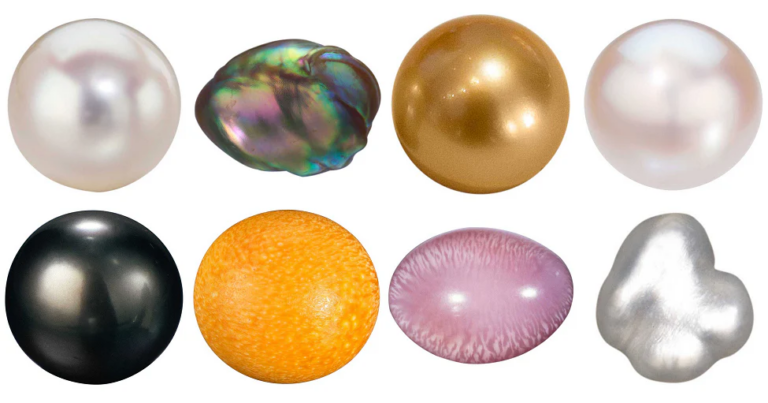
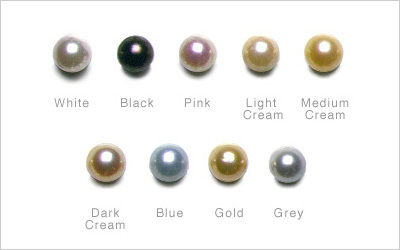
As the only gemstones on the planet that are made by a living organism, pearls are amazing and fascinating in general. Of the many types of pearls available today, Japanese Akoya pearls are the perfectly spherical gemstones, known for their amazing shine and luminosity. They often boast an almost mirror-like quality. They come predominantly in bright white, other shades of white, champagne, peach, rose, and lavender. Sometimes, although rarely, they can be found in blue.
It was not until 1916 that Mikimoto began mass-producing cultured pearls at his pearl farms. As a result, the cultured pearl industry was established and soon became an important part of international jewelry stage.
By the late 1920s and early 1930s, cultured Akoya pearls were being used in fine jewelry not only in Japan but also by many heritage jewelry houses in Europe.
Primarily from the waters of Japan, small oysters known as the Pinctada Fucata produce the Akoya pearl. This is the smallest pearl-producing oyster in the world. The Akoya pearl ranges from 2mm to 10mm in circumference, with an average size of 6mm to 7mm. While the majority of production takes place in Japan, they are also farmed in China, Vietnam, and other parts of the Asia-Pacific area, where the right oceanic temperature and pH balance contribute to the Akoya pearls’ legendary beauty. It should be noted that the rising temperatures of sea waters globally over the last decade or so have had an downward impact on the pearl industry.
Matching Process
In order to find a perfectly matched strand of pearls, sorters must sift through thousands and assign them to specific categories. The sorting process is long and arduous, but in the end, it’s worthwhile – that’s the only way to get exceptionally matched pearls for a complete jewelry set. Thus, it’s quite an incredible feat when you see a pretty Akoya pearl necklace strung with many pearls of a consistent shape, color and luster. Indeed, this makes the piece something to be cherished for a lifetime!